 Paint Visualizer AI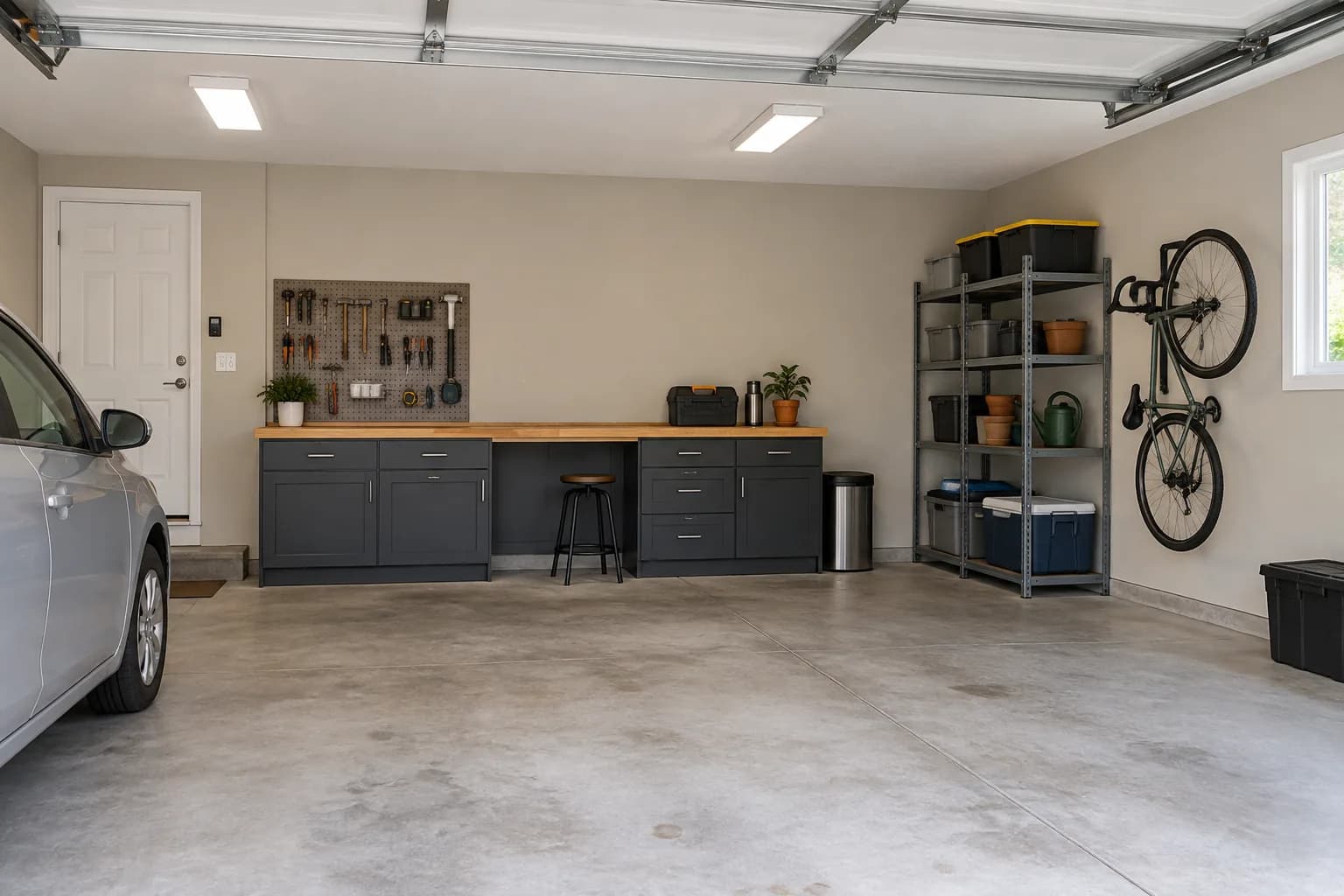
In our experience, most people looking for new garage paint want a color that still looks good when the walls pick up dirt or scuff marks. They also want it to go with their existing floor and cabinets, especially if they’re only repainting the walls.
However, depending on how you use your garage, there are other factors that determine which colors work best.
For example, if you use it for car repairs or DIY projects, lighter colors are better because they reflect light around your work area. If you use it to store and display cars and bikes, darker charcoal or navy can help the vehicles stand out against the walls.
In this article, we’ll cover 12 of the best colors for garage walls and explain where each works well. We’ll also share color combinations for your walls, floor, and cabinets.
Best Colors for Garage Walls
You have plenty of choices for garage walls beyond white and gray, including warmer neutrals, greens, and blues. You can also use one color throughout the garage or combine lighter and darker shades across the walls, cabinets, and trim.
1. Soft White
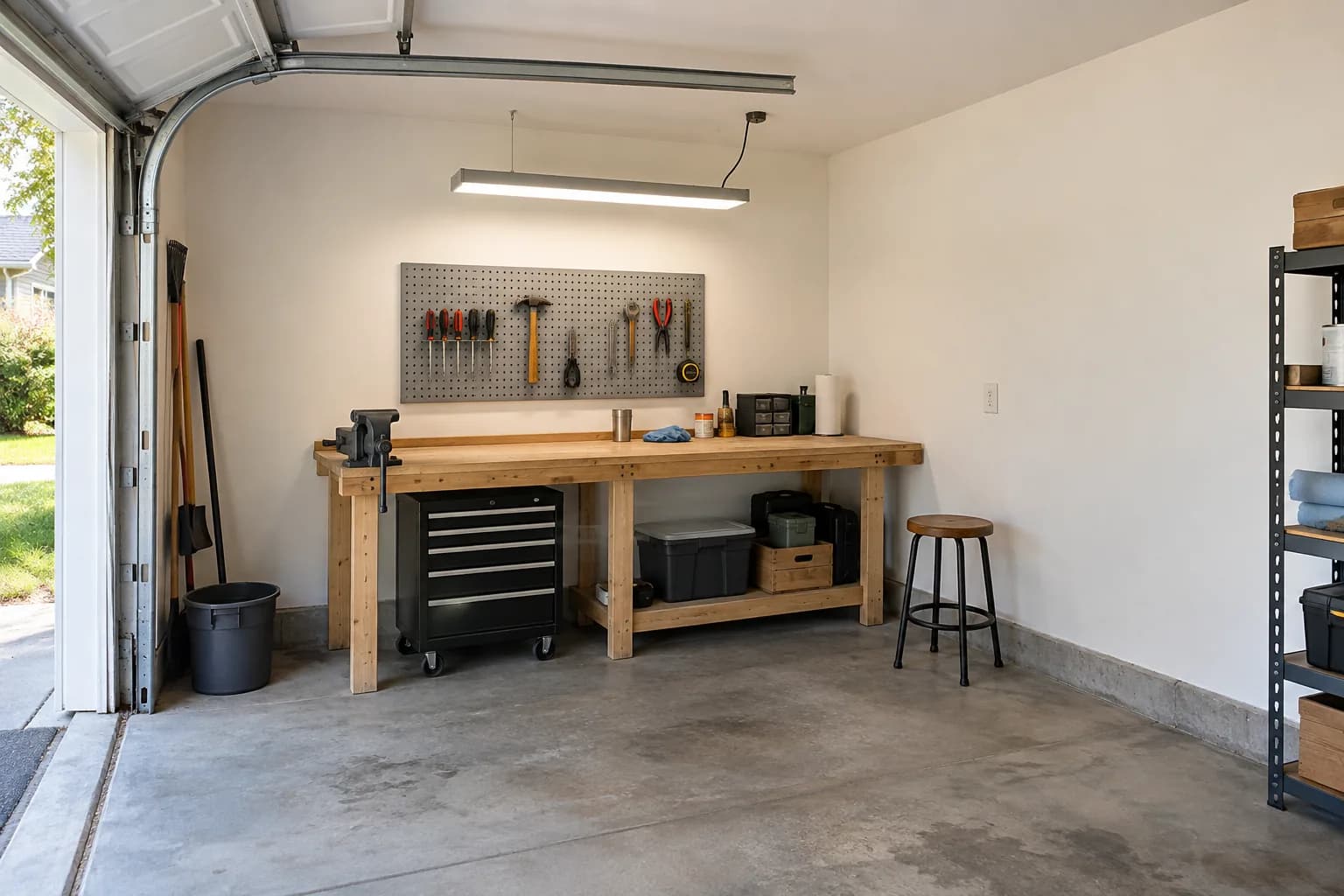
Soft white reflects light around your garage, making it a practical choice if you regularly work on cars or DIY projects. You can use it throughout the space, including around workbenches and storage areas where you need good visibility.
If you already have gray flooring and black or charcoal cabinets, try soft white on the walls to add contrast. You can also keep the ceiling white and use darker colors on the cabinets or trim rather than across an entire wall.
The main drawback is that white shows dirt and scuffs. We’d choose it when keeping the garage light matters more than disguising marks, and use a washable finish so you can clean the walls when needed.
2. Light Gray
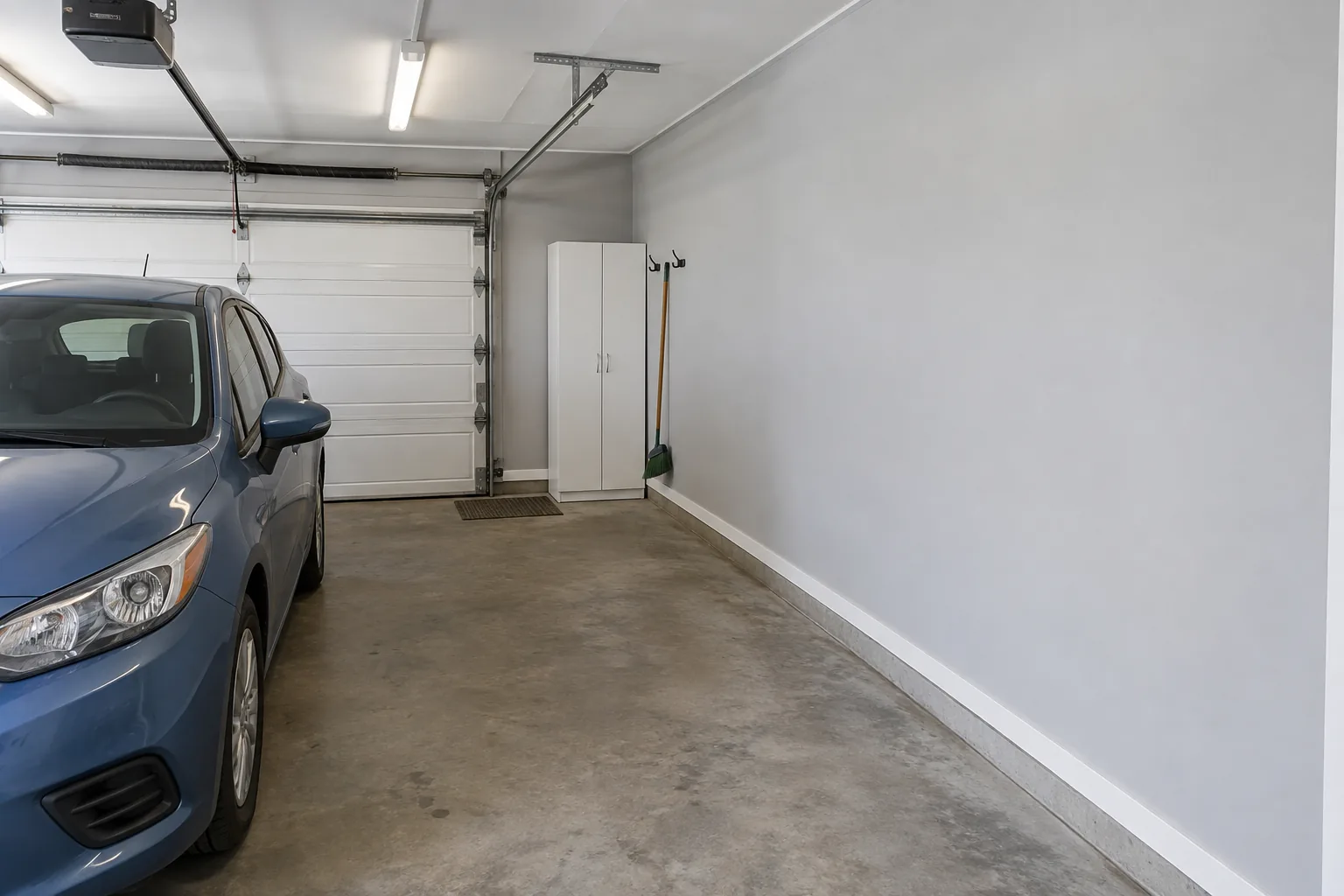
Light gray keeps the garage walls neutral without painting everything white. It works well for a garage where you park, store tools, and occasionally work on projects, since lighter shades still help reflect the available light.
If your floor is also gray, try a lighter shade on the walls rather than matching the two surfaces.
For example, you could combine pale gray walls with a darker gray floor and white cabinets, or use charcoal cabinets against the lighter walls.
Compare a large wall sample directly with your floor and cabinets before choosing the shade.
Check the combination with your overhead lights on and with the garage door open, so you don’t base your decision only on how the garage looks in daylight.
3. Greige
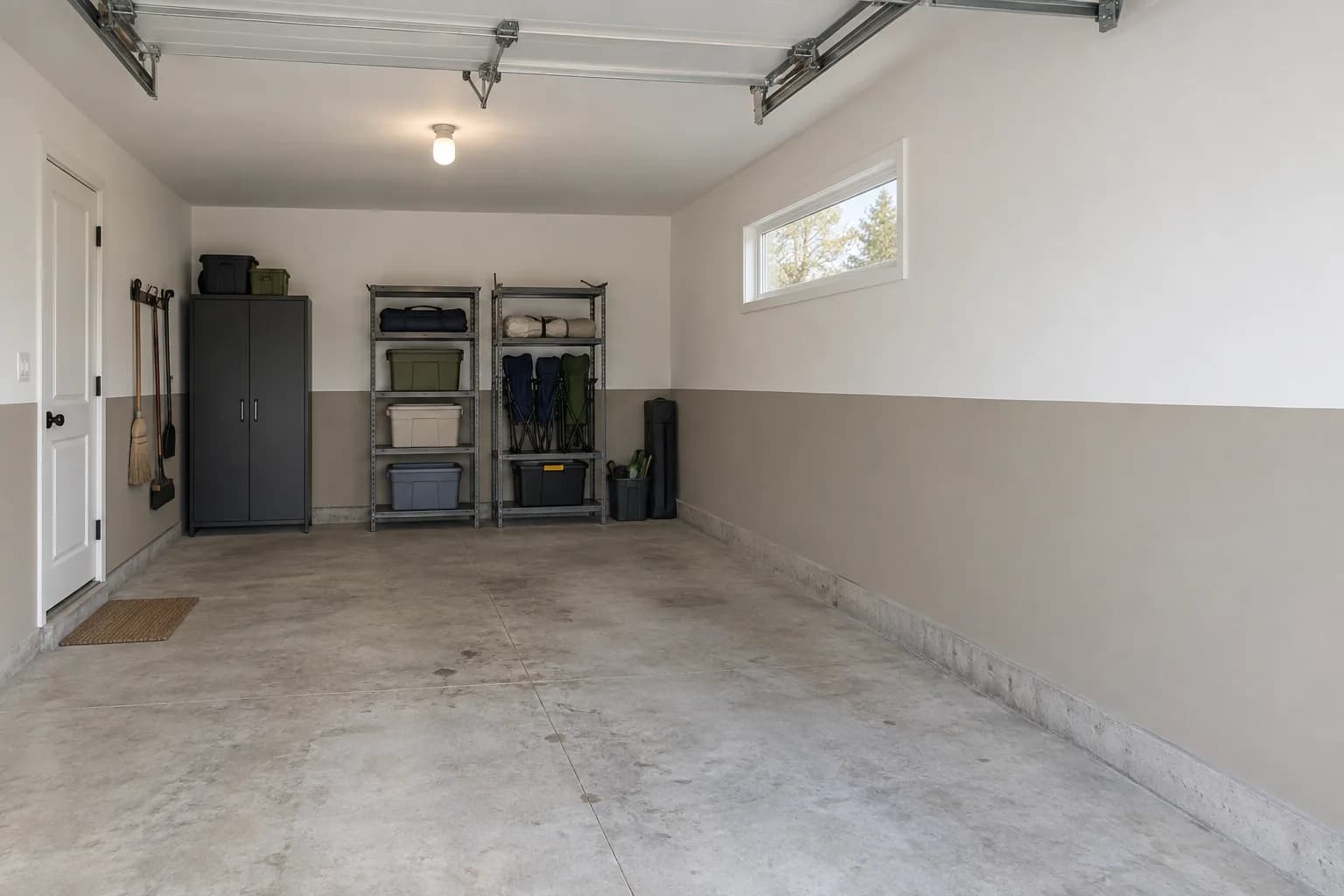
Choose greige if you want a warmer neutral for a garage you mainly use for parking and storage.
A mid-tone shade can help disguise everyday dirt and scuffs, making it a practical alternative to white when the walls get frequent use.
Try greige walls with a white ceiling and charcoal cabinets. This lets you use a warmer wall color while keeping some of the gray finishes you may already have in the garage.
You can also use greige on the lower portion of the walls with soft white above it. That puts the mid-tone color around the areas more likely to pick up marks while keeping the upper walls light.
4. Beige
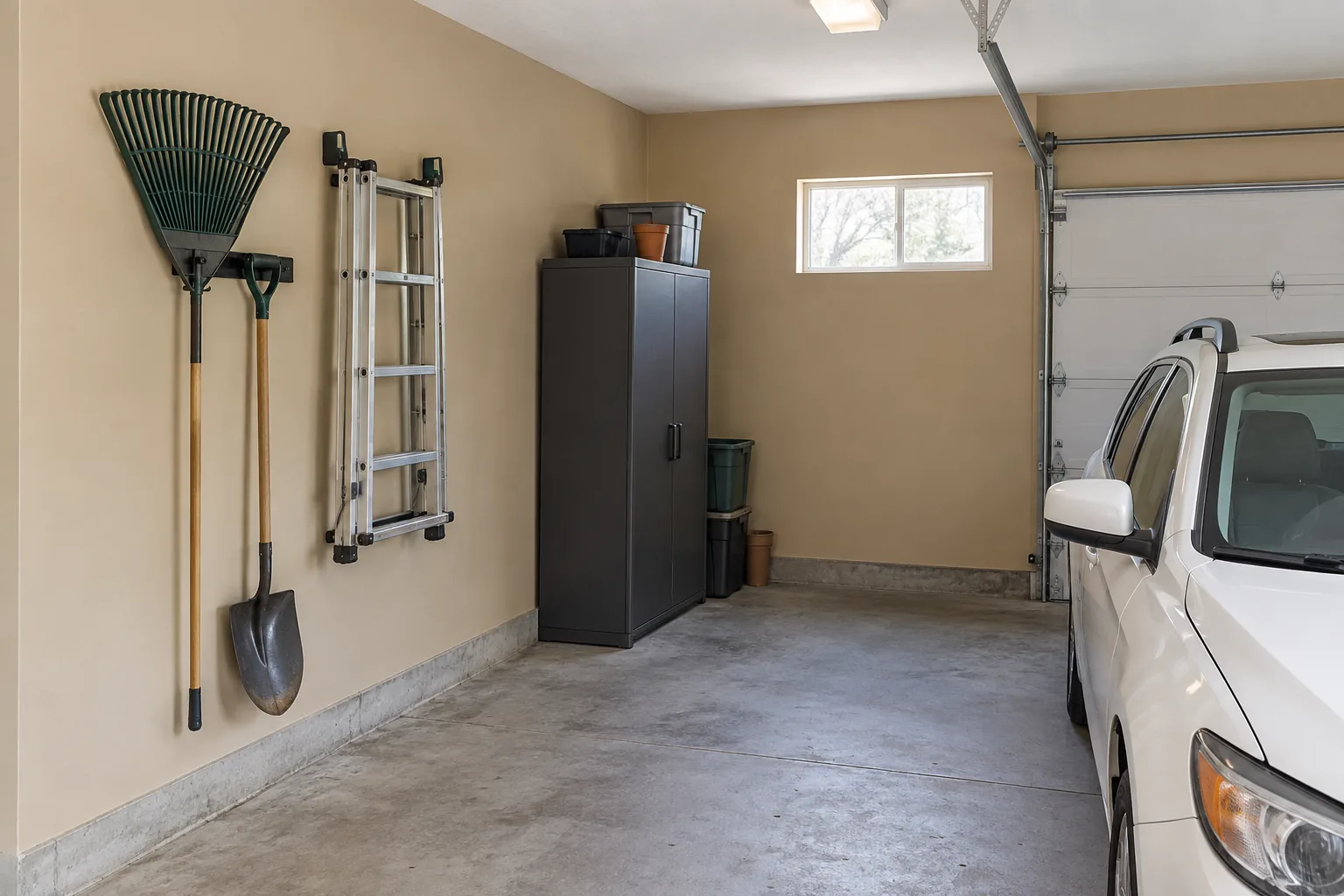
Beige gives you a warmer alternative to gray for a garage you mainly use for parking and storage. Choose a mid-tone shade if you want everyday dirt and scuff marks to be less noticeable, rather than a pale beige that looks closer to white.
Try beige walls with charcoal cabinets and a white ceiling. You can also use white cabinets for a lighter combination, particularly if your floor already adds a darker color to the garage.
If you spend time working in the garage, compare a light beige with a deeper shade before choosing. Lighter neutrals reflect more of the available light, so check both samples around your workbench with the overhead lights on.
5. Taupe
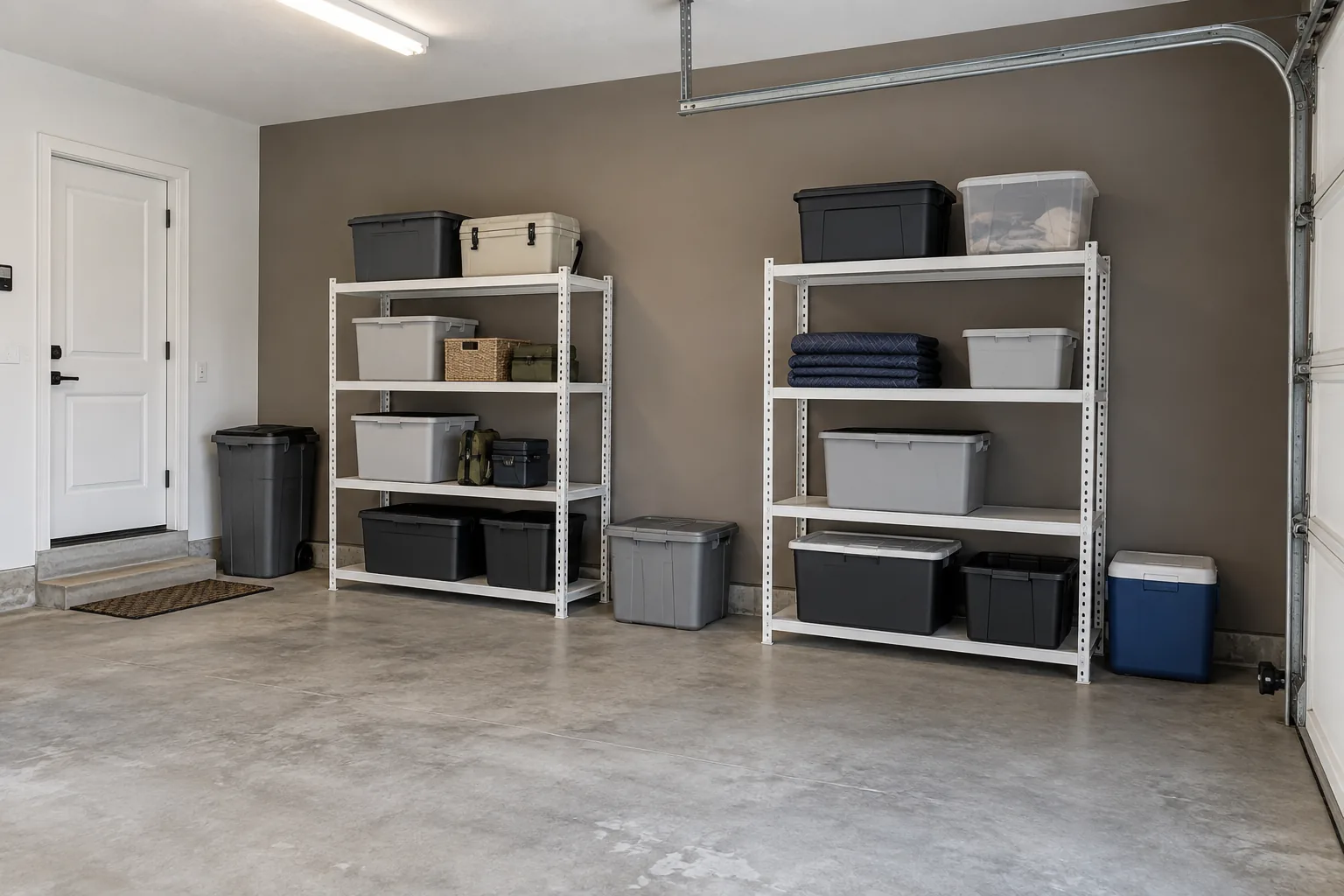
If you want neutral walls in a garage that sees frequent storage use, Taupe is a good color to paint your garage.
Mid-tone taupe can help disguise everyday wear, which makes it a great option around shelving and areas where you regularly move tools or storage bins.
You can paint all the walls taupe and use white on the ceiling, trim, and cabinets. Or try taupe behind your storage shelves and soft white on the surrounding walls if you don’t want the same color throughout.
Choose the finish alongside the shade, especially for walls you’ll need to wipe down regularly.
Satin or semi-gloss paint makes cleaning easier, so you don’t have to rely on the color alone to keep the walls looking presentable.
6. Cream
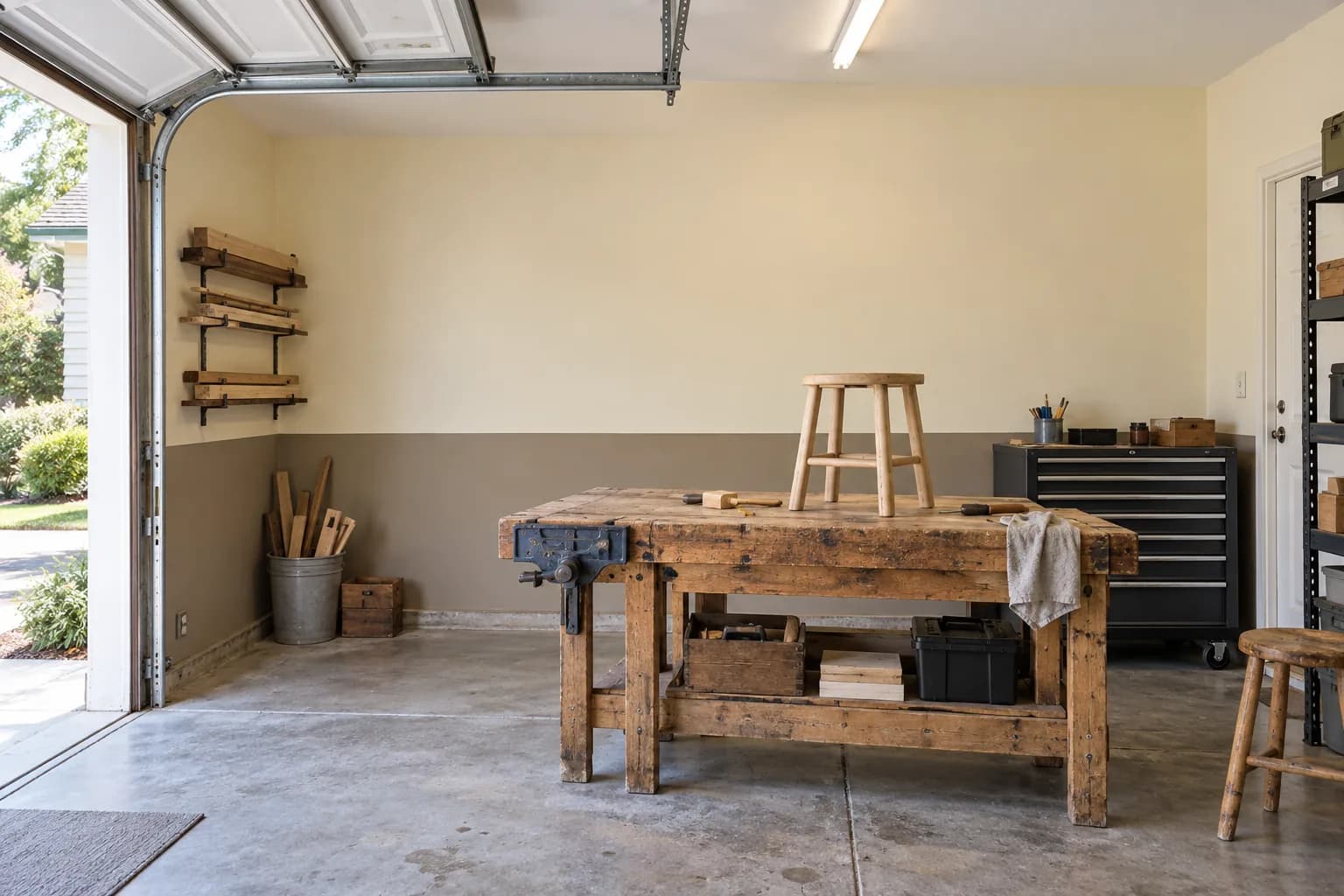
Cream lets you keep the garage walls light while introducing a warmer color than white. Like other light neutrals, it reflects the available light, so you can use it in a garage that doubles as a workshop without moving to a gray or blue palette.
Try cream walls with charcoal cabinets and a gray floor. For another combination, use cream on the upper walls and a mid-tone beige or taupe below, particularly around storage and work areas.
Choose cream for its light, warm appearance rather than its ability to hide marks. If visible dirt is your main concern, compare it with a mid-tone beige or taupe before deciding.
7. Sage Green
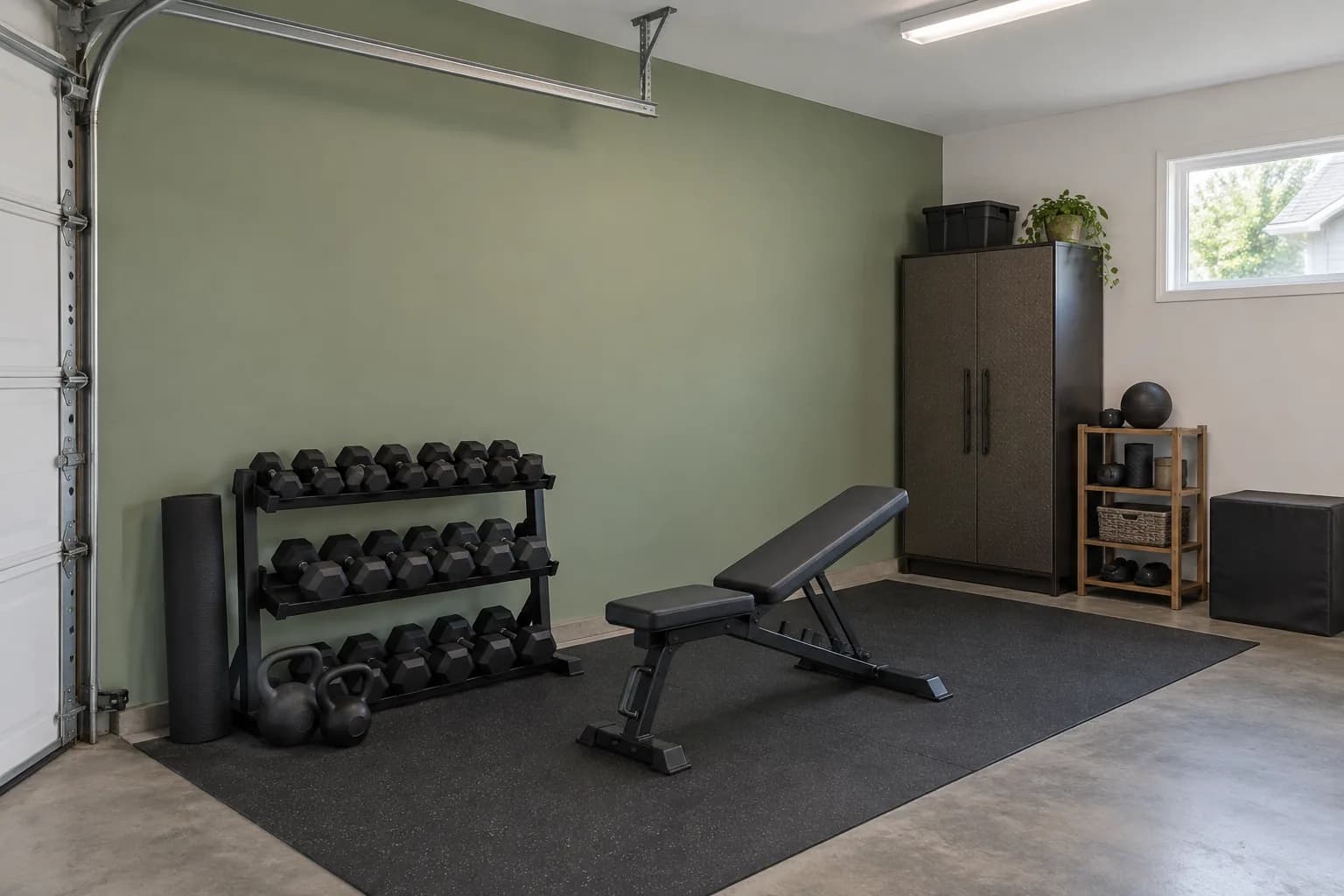
Sage green gives you an alternative to gray and beige, especially if your garage doubles as a home gym or hobby space. You can paint the whole garage sage or use it around your exercise equipment or hobby area to separate that space from parking and storage.
Try sage walls with a white ceiling and charcoal or dark bronze cabinets. For a two-tone scheme, use sage on the lower walls and soft white above.
Choose a mid-tone sage rather than a very pale shade if you want to make everyday dirt and wear less noticeable. You’ll still need to clean the walls, but the color can help disguise smaller marks between cleanings.
8. Light Blue
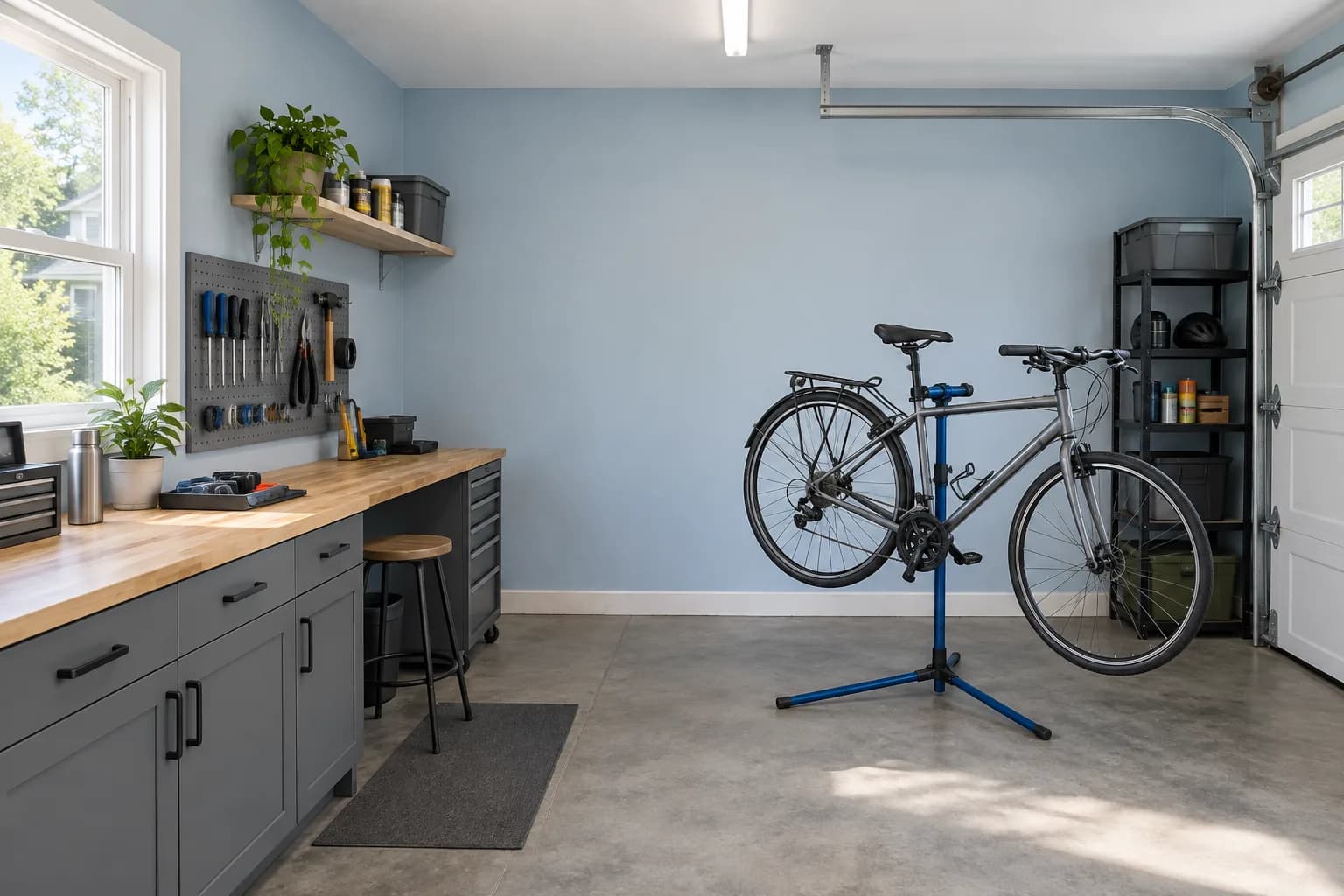
Light blue lets you add color to a garage where you regularly work on repairs or DIY projects. Keep the shade pale to help reflect the available light around your workbench and storage areas.
You can pair light blue walls with a white ceiling and gray cabinets. Or try navy cabinets against the lighter blue walls if you want more contrast without introducing a different color.
If you’re concerned about visible marks, compare light blue with a slightly deeper, dusty blue.
Mid-tone dusty blues can help disguise everyday wear, though you should check both shades under your garage’s lighting before deciding.
9. Forest Green
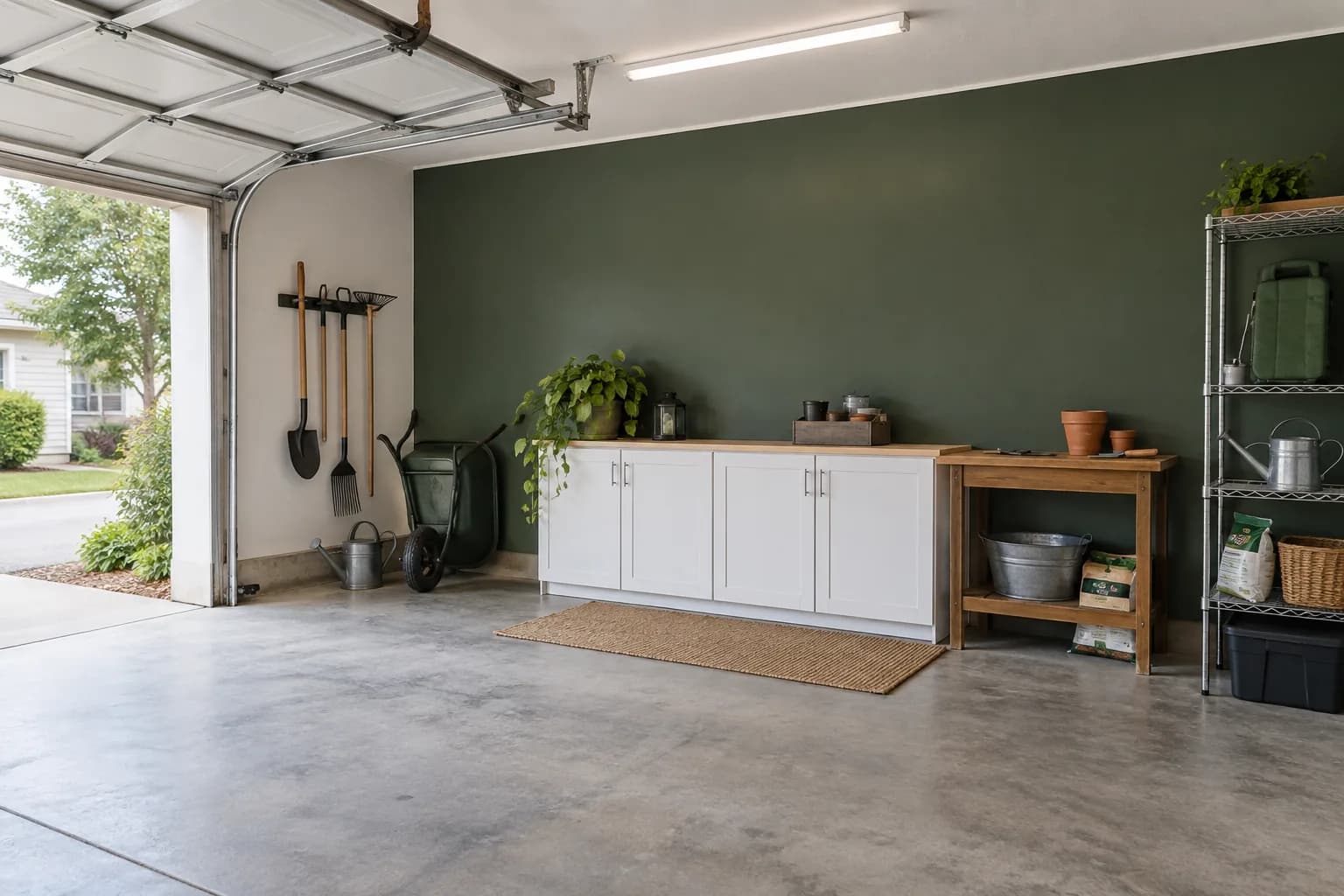
Try forest green if you want green walls but prefer a deeper color than sage. You can start with a feature wall instead of painting the entire garage, especially if you also use the space for work and want to keep most walls light.
One combination to try is forest green behind white cabinets, with soft white on the surrounding walls and ceiling. You could also paint the lower walls green and keep the upper walls white.
Compare a lighter forest green with a deeper shade before choosing how much of the garage to paint.
Check a large sample with the overhead lights on, especially around cabinets and shelving where you’ll see the color every day.
10. Charcoal Gray
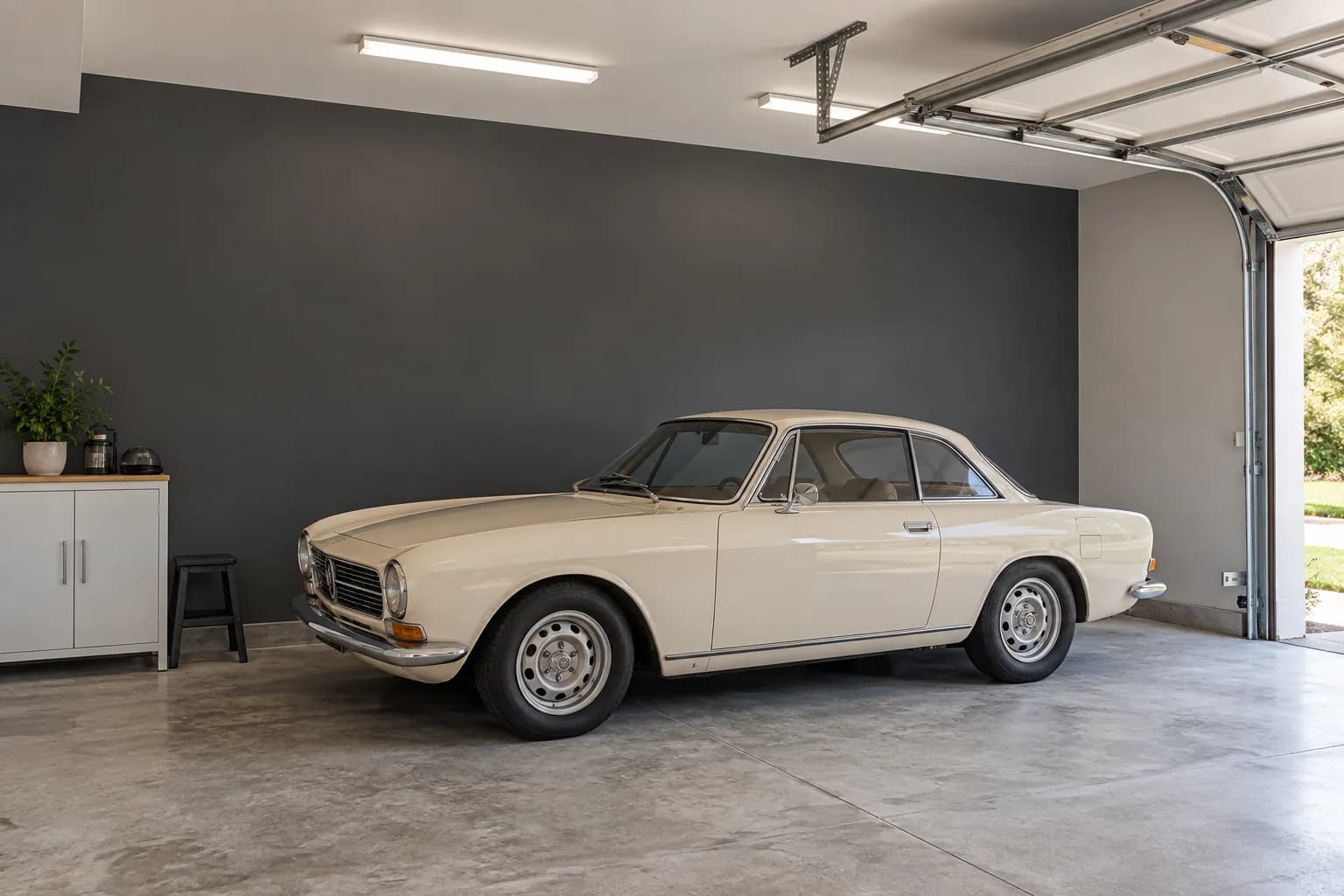
Charcoal gray gives you a dark background for a garage where you display cars or bikes. Use it on the wall behind the vehicles to help them stand out, rather than painting every wall the same color.
You can also use charcoal on the lower walls with a lighter shade above.
Try charcoal walls with white cabinets and a light gray floor. If you already have dark cabinets, use pale gray on the wall behind them and put charcoal on another wall so the cabinets don’t blend into the background.
If you also work on repairs in the garage, keep lighter walls around your workbench and use charcoal in the display area without giving up the light-reflecting surfaces where you work.
11. Navy Blue
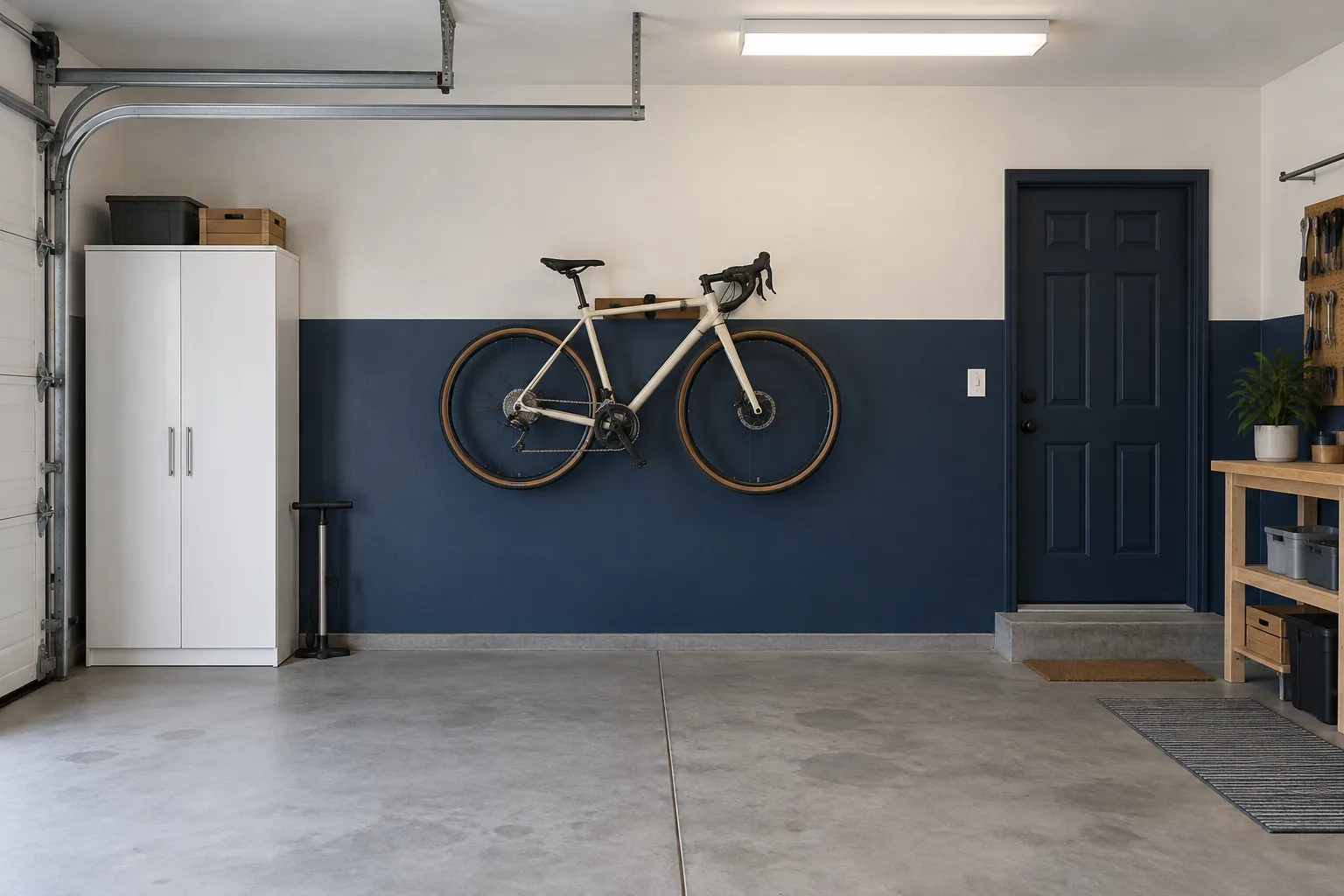
If you like darker garage walls but want something other than gray or black, Navy Blue is a great option. Navy works well behind a car or bike display, and you can use it on a feature wall while keeping the surrounding walls and ceiling light.
Try navy with white cabinets and gray flooring. For a two-tone combination, paint the lower walls navy and use soft white above.
You could repeat the navy on a door or a set of cabinets to carry the color into another part of the garage.
12. Black
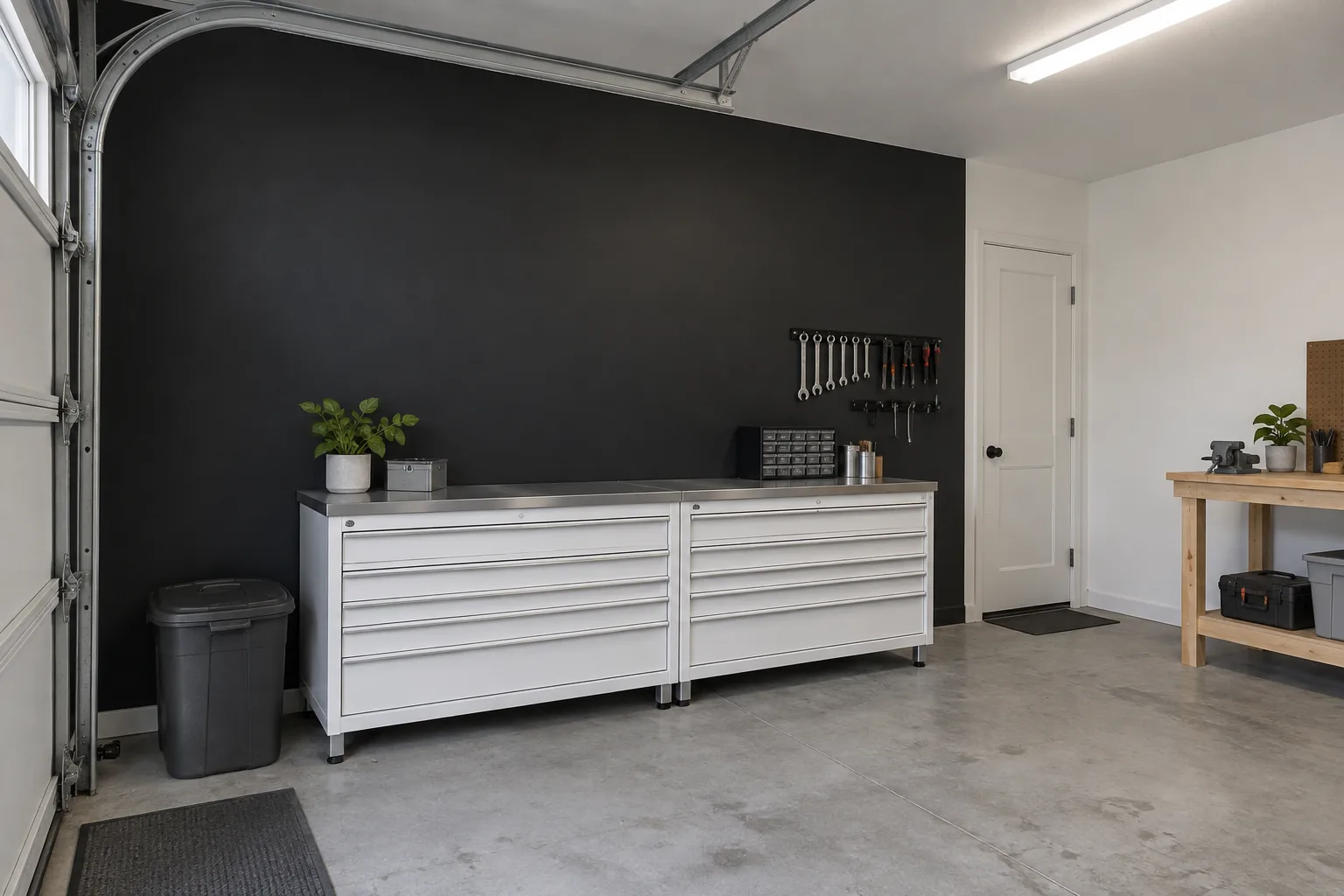
Black creates stronger contrast against white walls and light-colored cabinets.
Use it behind a vehicle display or a tool-storage area where you want those items to stand out against the wall. A single black wall lets you create that contrast without painting the whole garage black.
Try black behind white cabinets, with soft white on the adjacent walls and ceiling. If you already have black cabinets, you could keep their background light and paint a separate wall black instead.
We’d keep black to an accent in a garage you regularly use for repairs or DIY projects.
Garage Wall Color Combinations to Try
You can keep your garage’s color scheme neutral or add more color through the walls, cabinets, and trim.
Pair lighter walls with darker storage, use a separate color around your work area, or try a two-tone scheme instead of painting every wall the same shade.
The combinations below give you a few ways to bring these colors together:
Soft White Walls, Gray Floors, and Black Cabinets
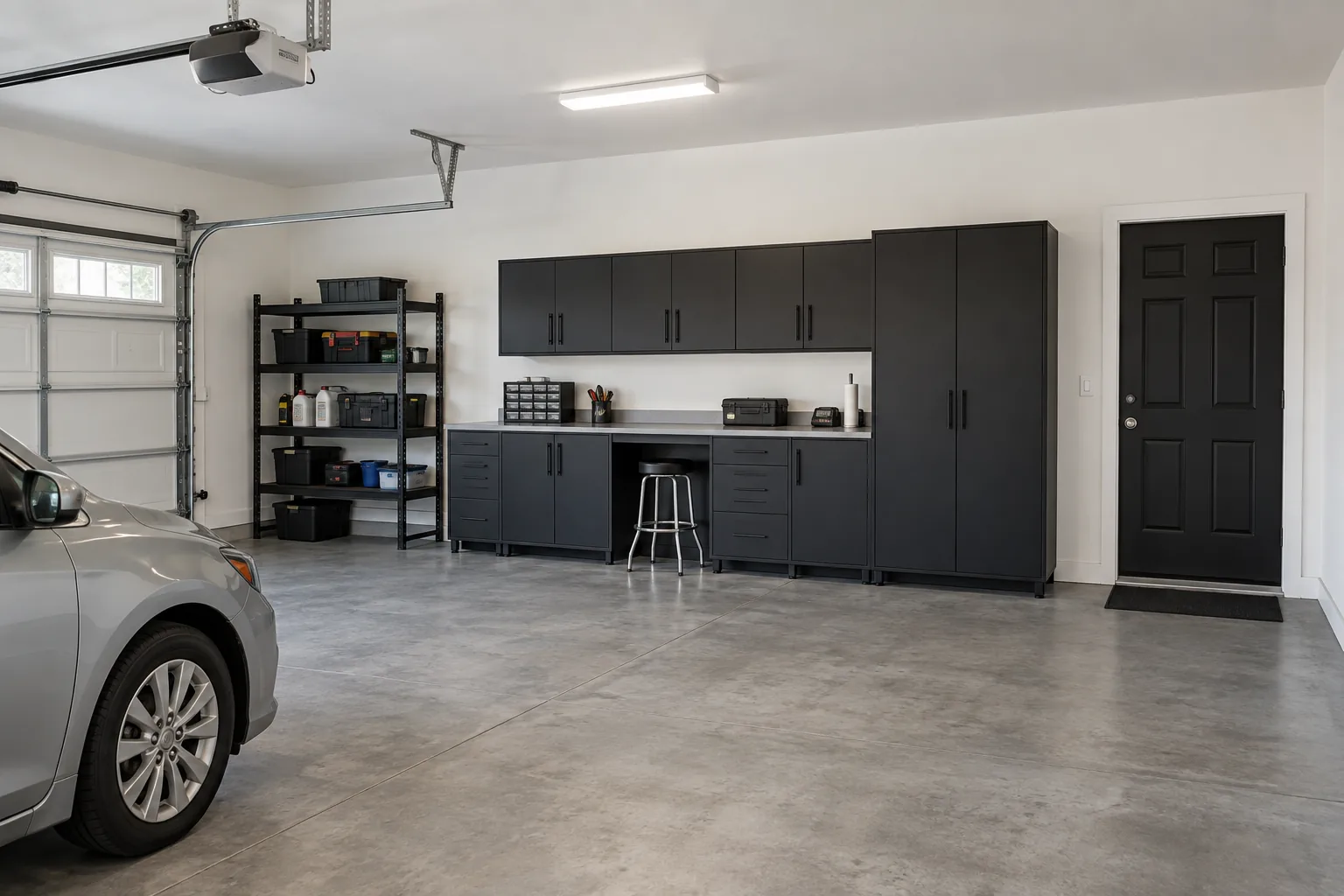
Pair soft white walls with black cabinets and a gray floor for a garage you use for both parking and projects.
The white walls help reflect the available light, while the black cabinets add contrast without putting a dark color across an entire wall.
Keep the ceiling and trim white, and repeat black on shelving or the door into the house.
If your floor already has a gray coating, you can build the rest of the scheme around it rather than changing the floor to match your new walls.
Greige Walls With Charcoal Cabinets and White Trim
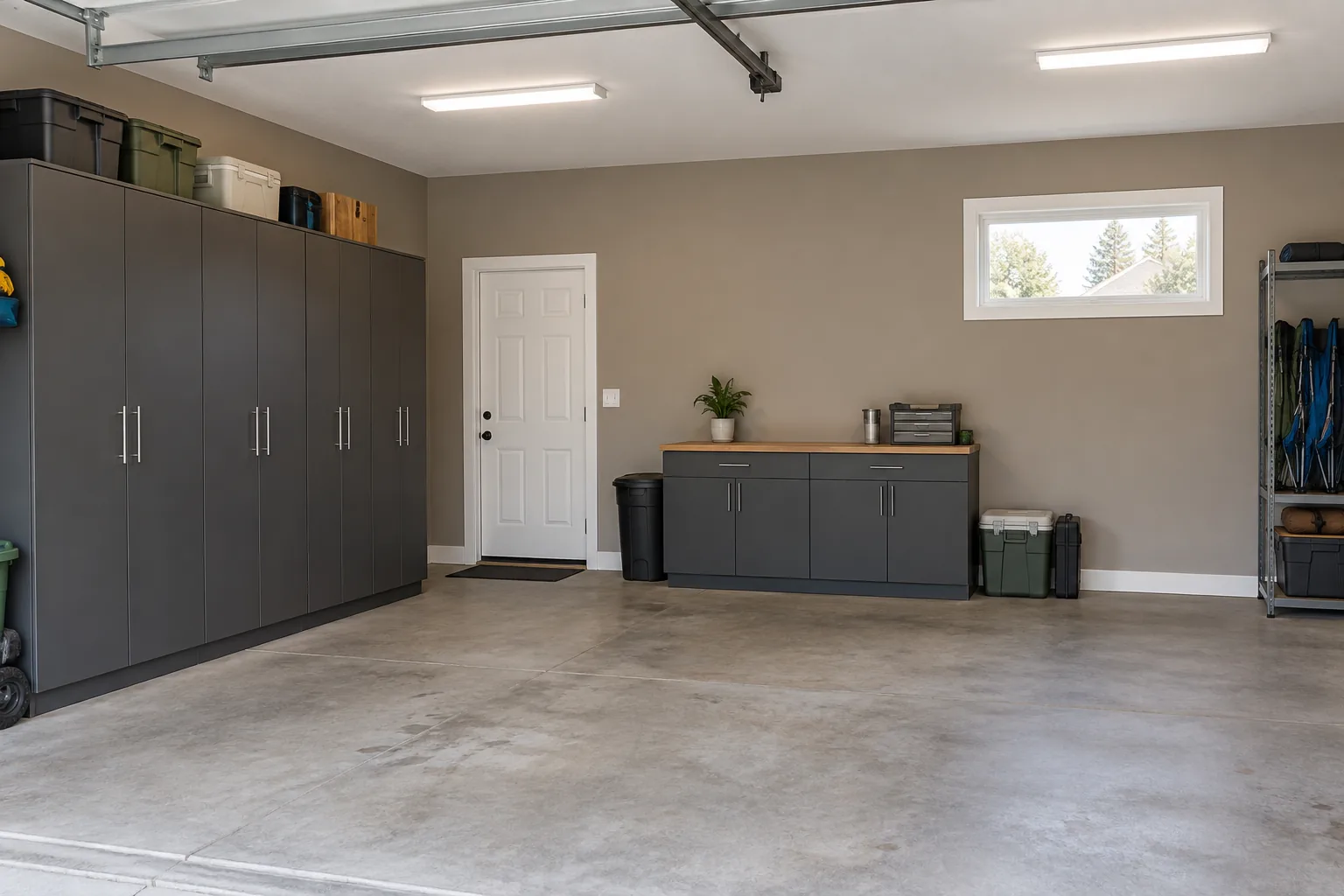
Use greige walls with charcoal cabinets when you want a warmer alternative to an all-gray garage.
Paint the ceiling and trim white so you have a clear difference between the light overhead surfaces, warmer walls, and dark storage.
Try this combination with a gray or taupe floor.
If you already have charcoal cabinets along one wall, continue the greige around the garage rather than introducing another accent color behind the storage.
Sage Green Walls With Dark Bronze Cabinets
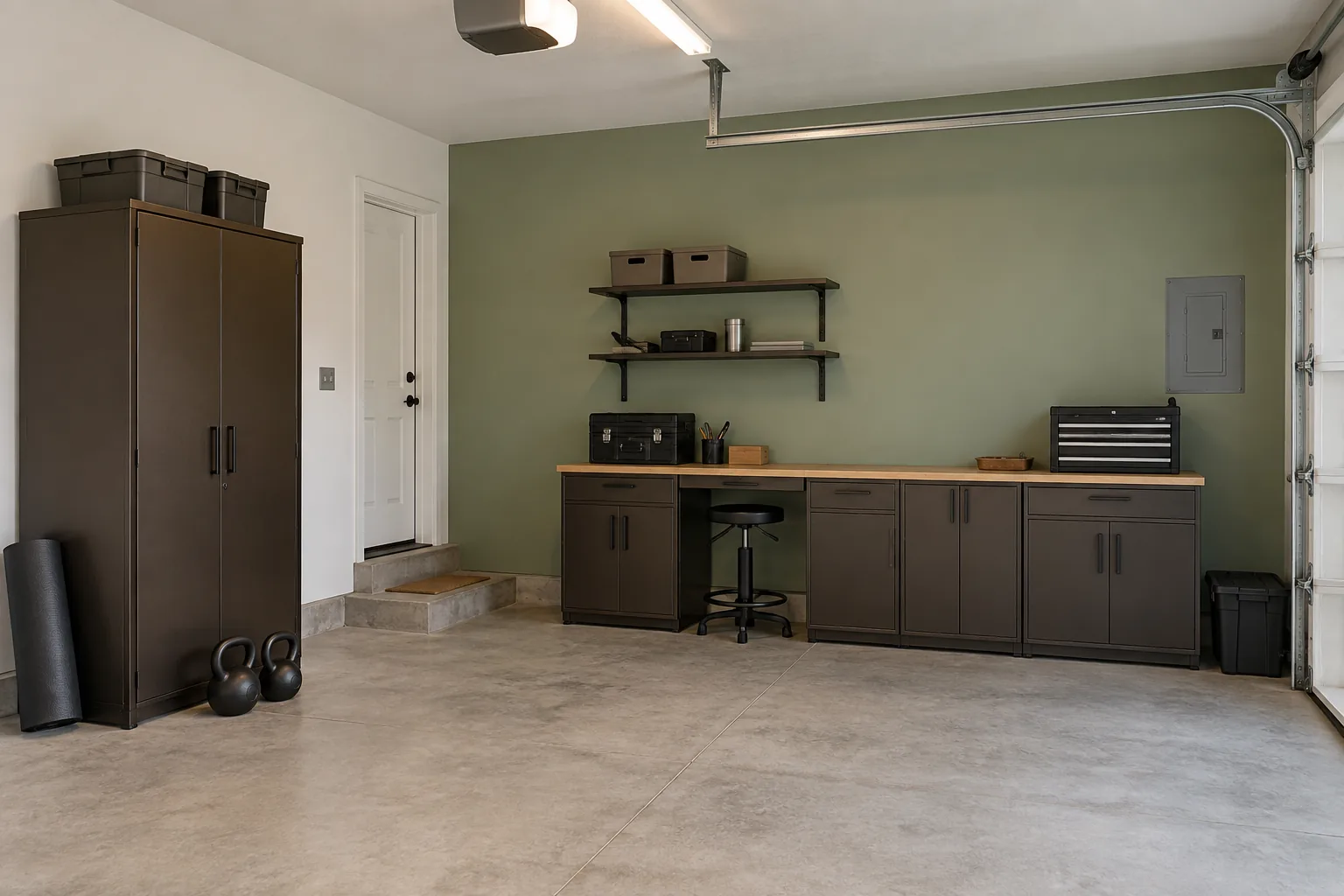
Pair muted sage walls with a white ceiling and dark bronze cabinets for a garage that brings in green without relying on a bright accent color.
Choose a brown-toned bronze for the cabinets, then keep the floor light gray or taupe.
You can also use sage around a home gym or hobby area and paint the remaining walls soft white.
Carry the same cabinet and shelving colors through both areas so the green marks out a different use without introducing an entirely separate color scheme.
Light Blue Walls With Navy Cabinets
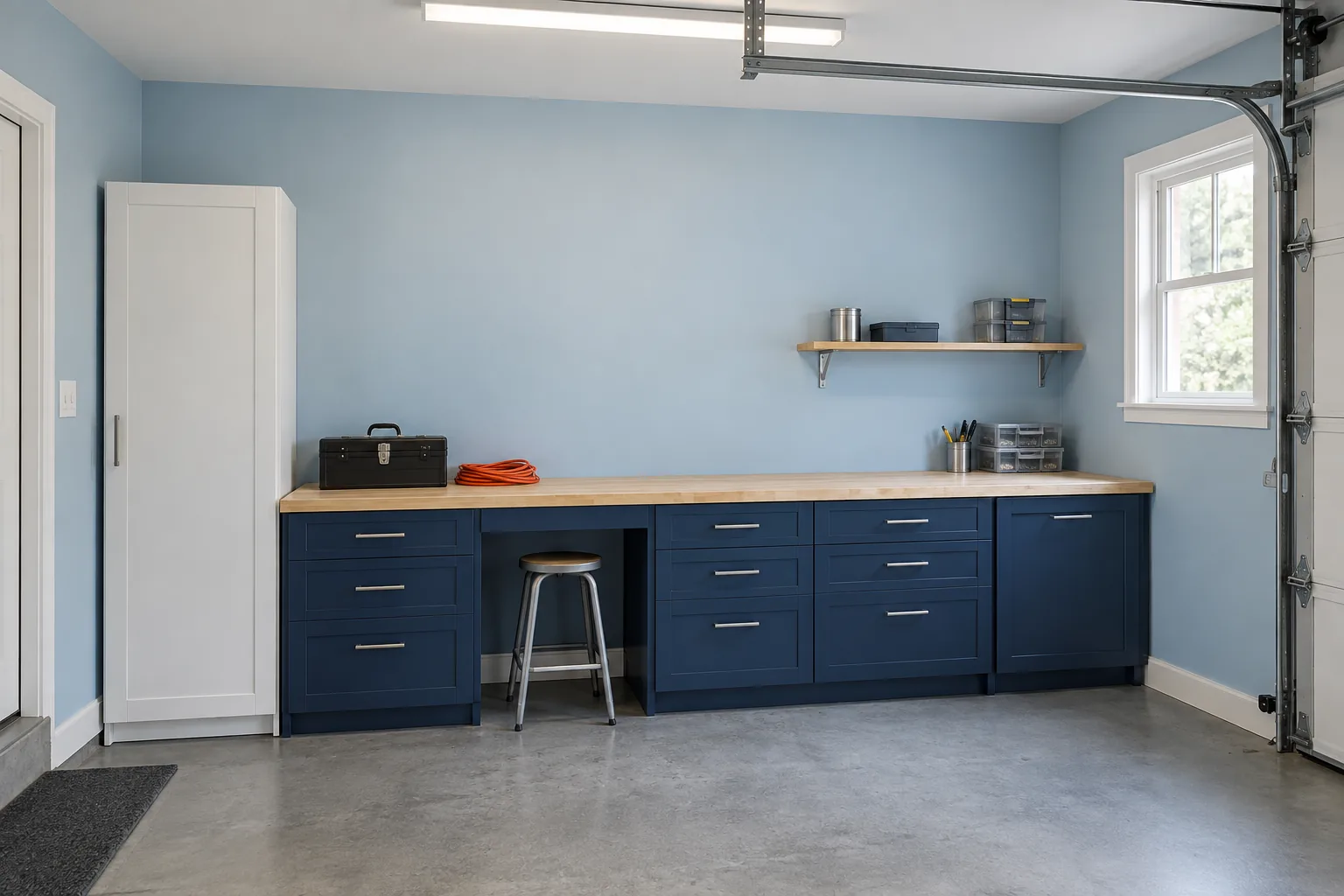
For another combination, try light blue walls with navy cabinets and a white ceiling. Use a muted blue rather than a bright shade, and let the navy cabinets provide the strongest color in the garage.
A gray floor keeps the attention on the blue walls and storage. You could also use navy on one cabinet bank beneath a workbench and keep the taller cabinets white.
That gives you a smaller area of dark blue to try before committing to navy across all your storage.
Cream Walls With Taupe Cabinets
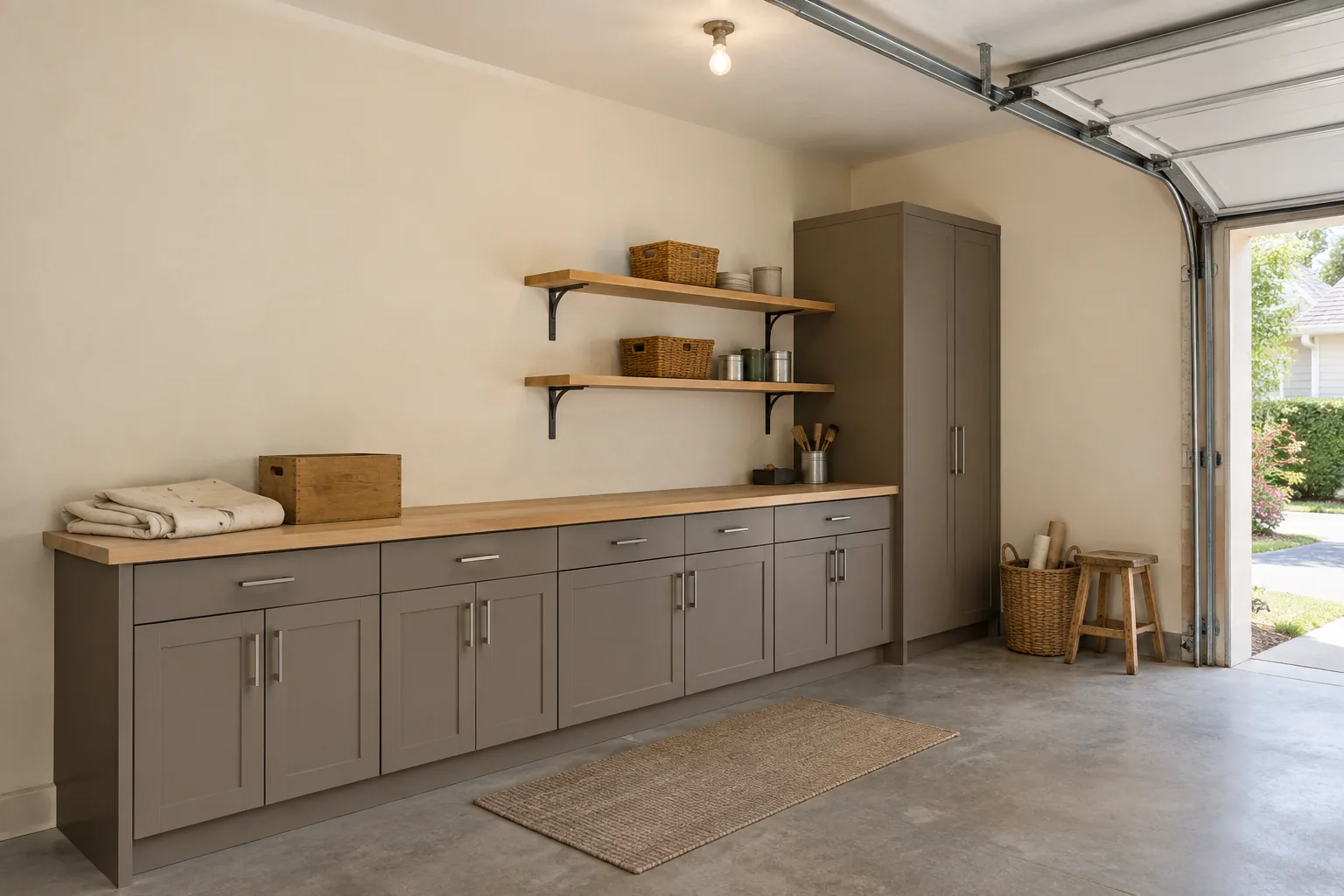
Try cream walls with taupe cabinets if you prefer warmer colors across the garage. Keep the walls lighter than the cabinets, and use white or a pale cream on the ceiling and trim.
A light taupe or warm gray floor would complete this palette.
You can leave wood shelves or a wooden workbench unpainted as part of this scheme.
Rather than adding black to create contrast, choose a deeper taupe for the cabinets and let the wood introduce another shade of brown.
Navy Walls With White Cabinets and Gray Flooring
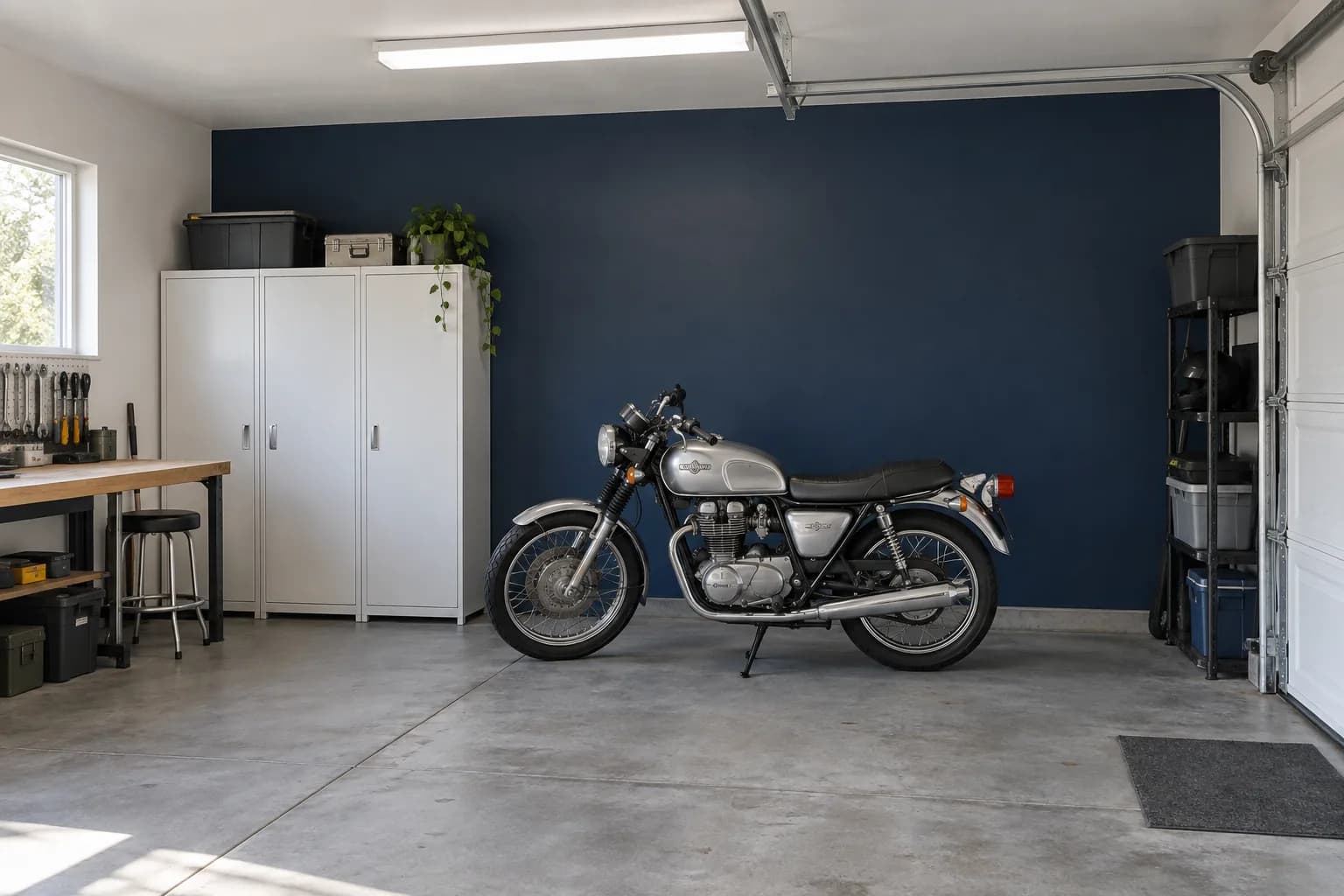
Use navy on a wall behind your car or bike display, then balance it with white cabinets and a gray floor.
Keep the ceiling white and use soft white on the adjacent walls. If the navy wall also holds cabinets, choose white storage against it; if the wall holds the vehicle display alone, place the cabinets along a neighboring wall.
You can repeat navy on a door without adding another large dark surface.
Soft White Upper Walls With Charcoal Lower Walls
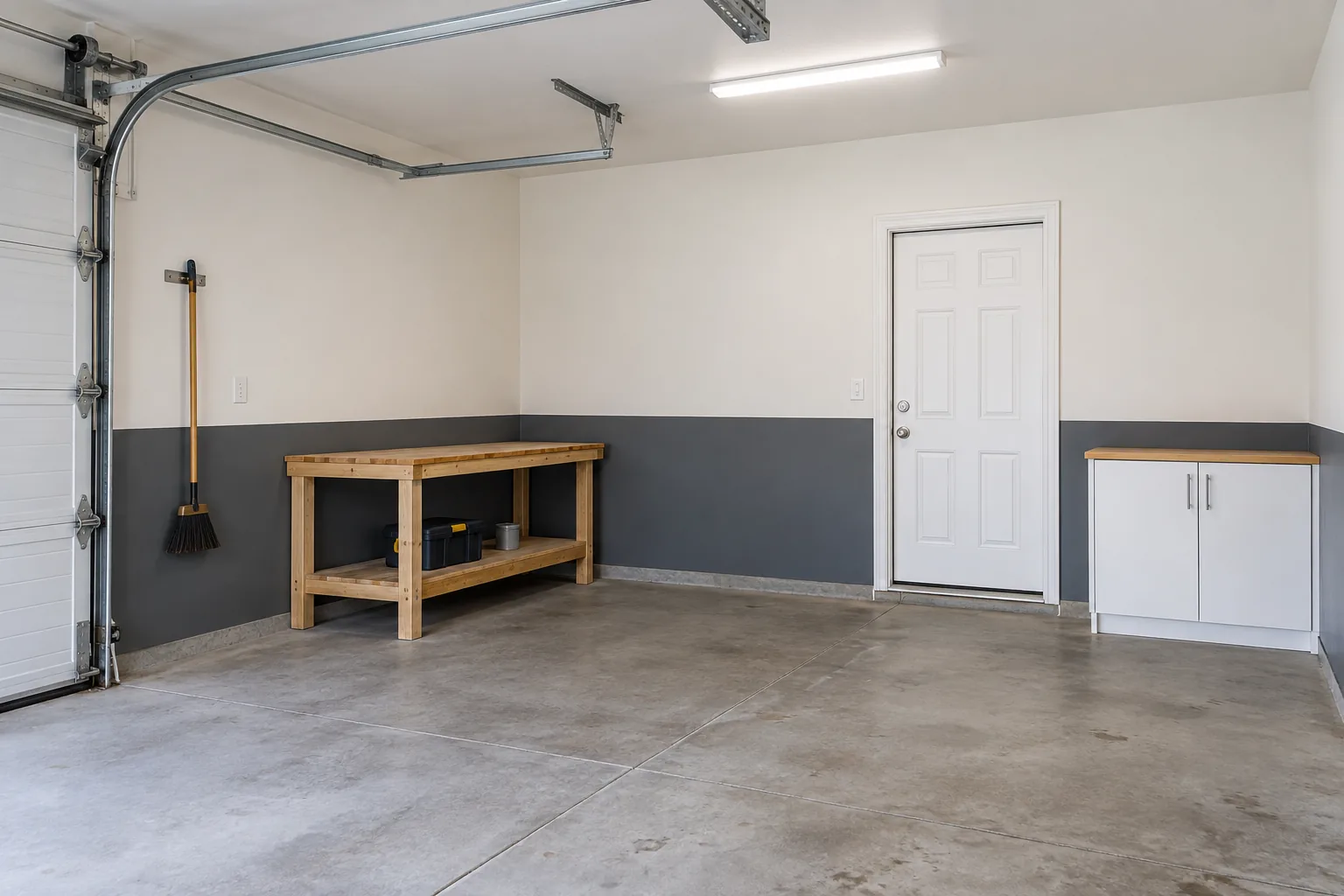
Paint the lower walls charcoal and use soft white above, continuing the white onto the ceiling. This gives you a two-tone scheme instead of a single dark feature wall.
Pair it with gray flooring and white cabinets, or keep existing charcoal cabinets against the lighter upper walls.
Mark the dividing line with painter’s tape before you paint. Try aligning it with the top of your workbench or lower cabinets, then check how it looks around doors and shelving.
Keep the line at the same height across the walls rather than automatically dividing each wall into equal halves.
How to Choose the Right Color for Your Garage Walls
Before you settle on a color, consider your garage’s lighting, the surfaces you plan to keep, and how you use the space.
You’ll also need to choose a paint finish that suits the walls and the amount of cleaning they need.
Check the Color Under Your Garage’s Lighting
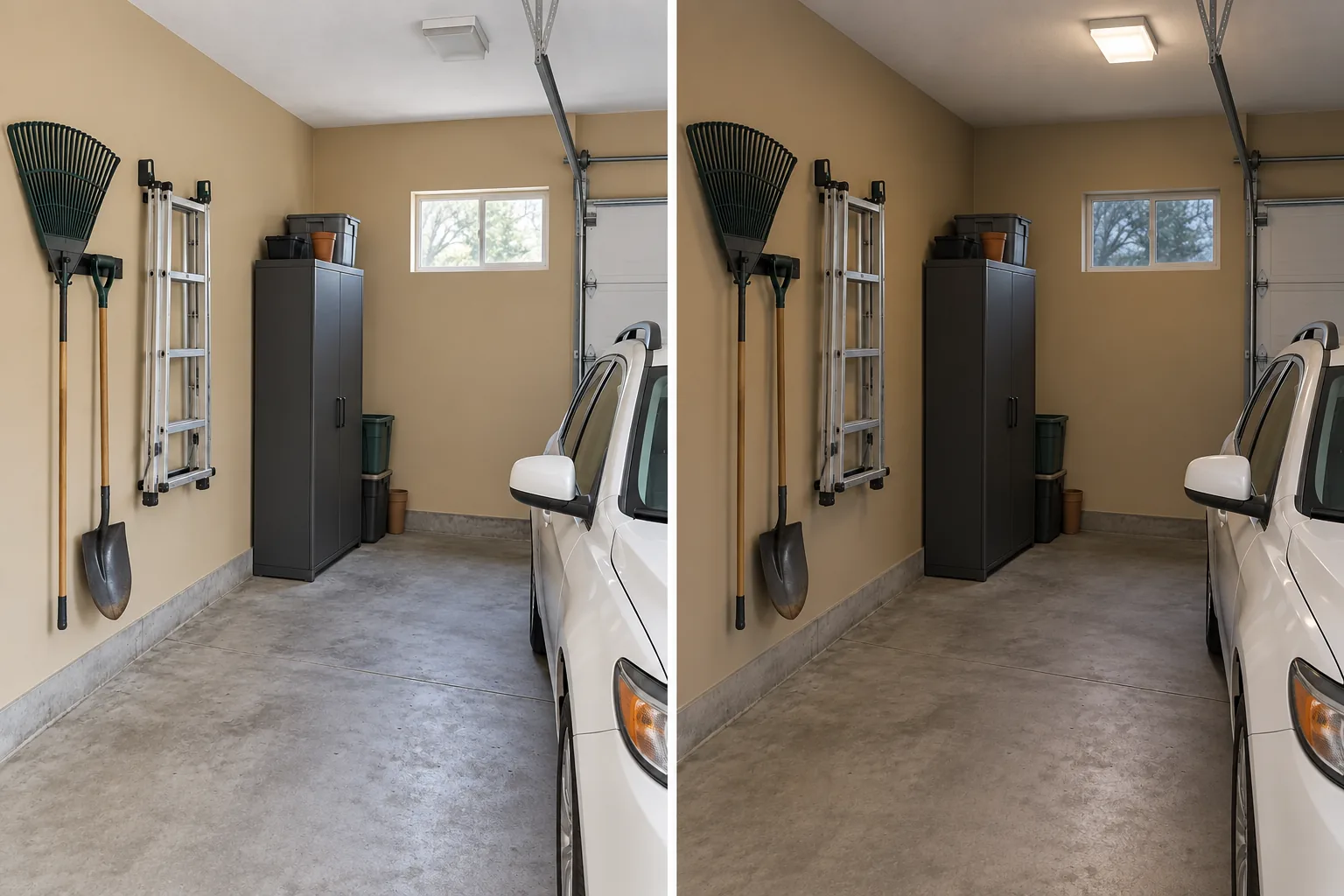
Compare your paint samples with the garage door open, then close it and turn on the overhead lights.
If you usually work in the garage in the evening, check the samples then rather than making the decision entirely in daylight. Use large samples so you can judge more than a small patch of color.
For a garage with limited natural light, start by comparing lighter shades.
Light-colored walls and ceilings help reflect the available light, so consider where you need that reflection before covering a large surface with charcoal, navy, or black.
Work With Your Existing Floor and Cabinets
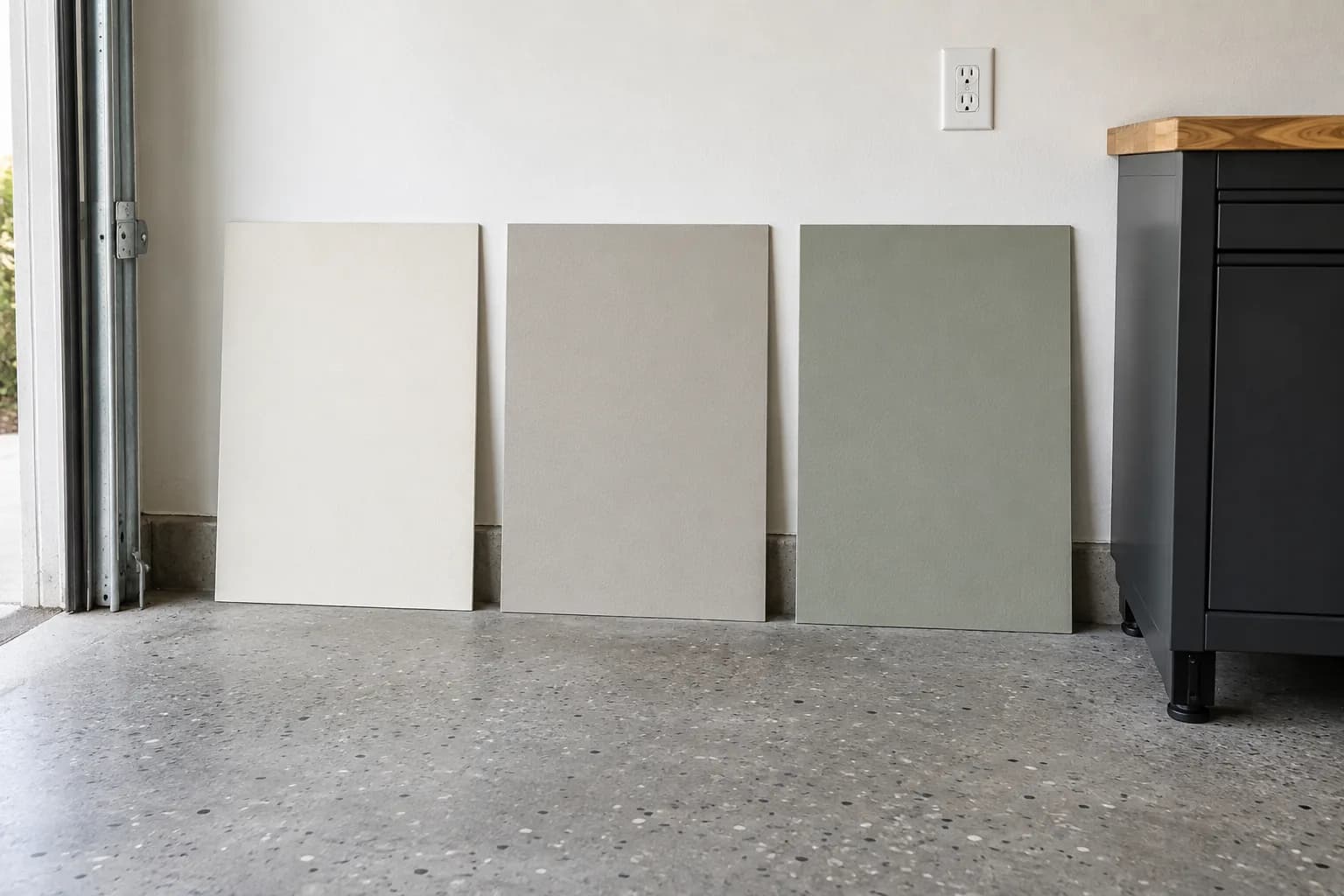
Choose the wall color alongside your floor and cabinets, especially if you don’t plan to replace or repaint them. Include the ceiling, trim, and doors in that decision rather than choosing each color separately.
Try lighter walls against dark cabinets, or use a warmer neutral on the walls alongside gray flooring.
Consider How You Use Each Area
If your garage serves several purposes, you can use different colors around each area.
Keep the walls light around a workbench, use a deeper color behind a vehicle display, or bring green or blue into a separate hobby space.
For a garage you mainly use for parking and storage, give more weight to how the walls will look with everyday wear.
Compare mid-tone gray, greige, beige, or taupe when visible dirt and scuffs concern you more than choosing the lightest possible color.
Choose a Finish You Can Clean
Color can help disguise some marks, but you’ll still need to clean the walls.
Consider satin or semi-gloss paint around storage and work areas where you regularly touch the walls or move equipment.
These finishes commonly appear in garage paint recommendations because they allow easier cleaning than flat finishes.
Check the condition of the walls before choosing the sheen. Very glossy paint can make imperfections more noticeable, so weigh cleanability against how much unevenness you want to show.
Test the Color Before Painting the Whole Garage
Use Paint Visualizer AI to explore different wall colors on a photo of your garage. Choose a photo that includes the floor and cabinets so you can compare each wall color with those surfaces rather than judging it from a swatch alone.
For example, you could compare soft white, greige, and sage green on the same garage photo.
This gives you a way to explore noticeably different options before narrowing the choice to a few shades within one color family.
Then test your favorites with physical paint samples in the garage. Check them in daylight and under your overhead lights before buying enough paint for the whole space.
Use the digital previews to narrow your choices, and the physical samples to make the final decision.
Find the Right Wall Color for Your Garage
Choose a garage color you’ll be happy with during everyday use, not just when it is freshly painted and everything is put away. Think about the marks the walls pick up, the lighting where you work, and the floor and cabinets you plan to keep.
You can also combine colors when different parts of the garage serve different purposes.
Use Paint Visualizer AI to compare your favorite wall colors on a photo of your garage. Try a few different options, such as soft white, greige, or sage green, before narrowing your choices to similar shades.
Then check your favorites with physical paint samples under your garage’s lighting before buying enough paint for the whole space.