
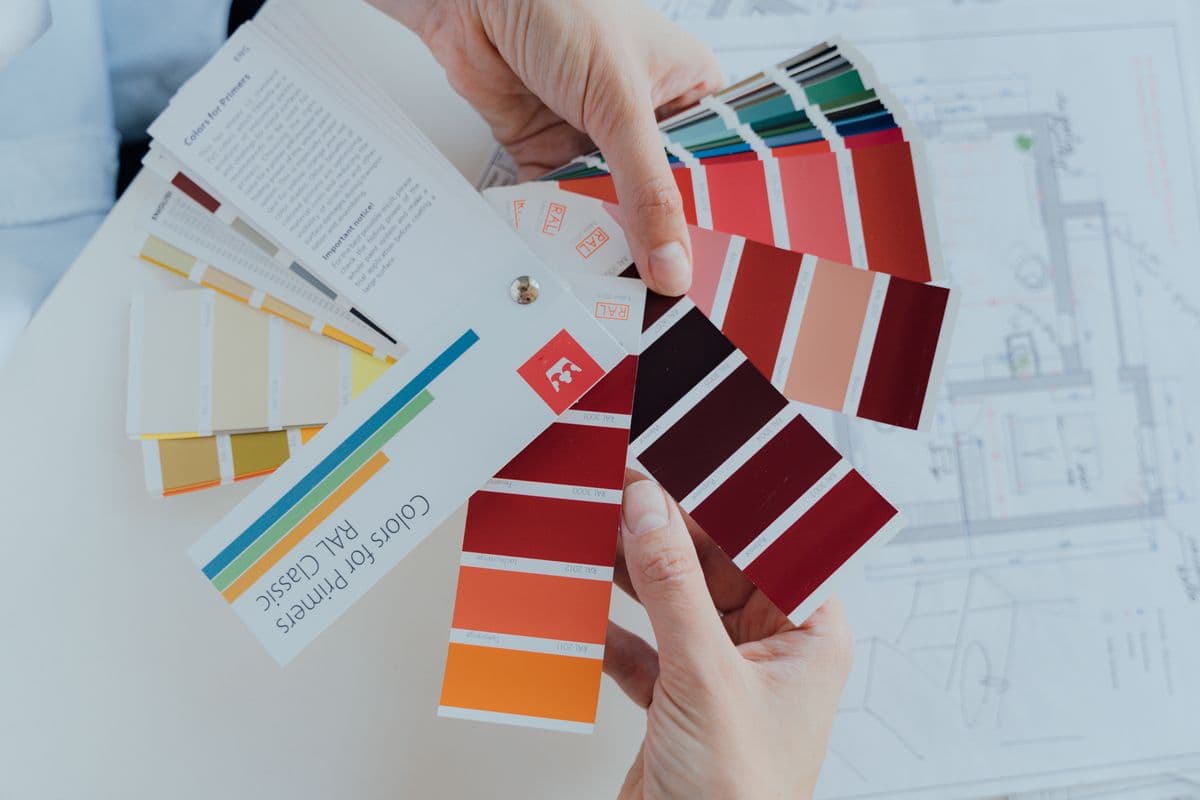
If you need to repaint part of a wall but no longer have the original paint can, or you have found a color from another brand you want mixed at Home Depot, color matching can save you from guessing at the closest shade from a wall of paint chips.
Home Depot does offer in-store paint color matching. You can bring a physical color sample to the paint desk, where it is scanned and used to create a custom tint formula. Home Depot says a sample about the size of a quarter is enough, although a clean, uniform sample gives the system a better surface to read.
You can also use the service for colors that were not originally mixed at Home Depot, including colors from other paint brands, discontinued colors, or existing paint where you no longer know the name or manufacturer.
In this guide, we’ll explain how Home Depot paint color matching works, what you can bring in to be matched, whether it can match colors from different brands, and how accurate you can expect the finished result to be.
How Does Home Depot Paint Color Matching Work?
Home Depot uses a color-matching system to measure a physical sample and create a tint formula that can be mixed into paint sold in the store.
The system uses a spectrophotometer, which measures how light reflects from the sample and translates that information into a color formula. Behr has documented the use of spectrophotometers in Home Depot paint departments for custom color matching.
Once the color has been scanned, the formula can be mixed into the paint product you choose. You will still need to select the appropriate interior or exterior paint, along with the finish or sheen you want.
What Can You Bring to Home Depot for a Paint Match?
A physical sample gives Home Depot something it can scan directly. Home Depot says a quarter-sized color sample is sufficient for its color-matching service, while Behr recommends a sample around 1 inch by 1 inch.
That sample does not necessarily have to be a traditional paint chip. Behr specifically says you can bring a piece of paint removed from a surface, a fabric sample, a competitor’s paint swatch, or even some leftover paint.
If you are trying to match an existing wall, you can remove a small piece of painted drywall from an inconspicuous area. Behind a switch plate or outlet cover is often a convenient option because the repair will be hidden afterward.
Whatever you bring, try to choose an area that represents the color you actually want matched. A clean, consistently colored section will generally be more useful than an area that is stained, damaged, heavily textured, or unusually faded.
Does Home Depot Charge for Color Matching?
Home Depot advertises free color matching and factory tinting at its paint department. You pay for the paint you have mixed, rather than a separate fee for scanning the color and creating the formula.
Can Home Depot Match Paint From a Photo?
A photograph is not as useful for an exact custom color match as a physical sample.
The color captured in a photo can change depending on the lighting in the room, your camera’s exposure and white balance, and the processing performed by your phone. The same image can then look different again depending on the screen where you view it.
If you are trying to recreate an existing paint color, bringing a physical sample to the paint desk gives the color-matching equipment something to measure directly rather than trying to determine the color from a photograph.
If a physical sample is impossible to obtain, a photo can still help you find a similar paint color, but you should think of that more as finding a close shade than creating a precise custom match.
Can Home Depot Match Paint From Other Brands?
Yes. Home Depot can match colors from paint manufacturers other than the brands it sells.
Behr specifically lists a competitor’s paint swatch as something you can bring to Home Depot for custom color matching, while Glidden states on Home Depot’s website that most colors from other brands can be color matched at the in-store tint desk.
That means you can bring in a physical Sherwin-Williams, Benjamin Moore, Valspar, PPG, or other manufacturer’s color sample and ask Home Depot to recreate the color in a paint it carries.
If you have the manufacturer’s original swatch, bringing that with you is preferable to relying only on the color name. Paint brands can have thousands of colors, some names are reused or discontinued over time, and the color-matching system can work directly from the physical sample.
The same process can also be useful when you do not know what brand was originally used. If you bought a house with an existing wall color you want to keep, for example, you do not necessarily need to identify the original manufacturer first. A piece of the painted surface itself can be scanned.
A Color Match Is Not the Same as the Original Paint
There is an important distinction between recreating a Sherwin-Williams or Benjamin Moore color and recreating the original paint.
If Home Depot matches a Benjamin Moore color into a Behr paint, for example, you are still buying Behr paint. The base paint, colorants, formulation, coverage, finish, and other characteristics are not necessarily the same as the Benjamin Moore product the original color came from.
Even different paint products within the same brand can require different tint formulas to arrive at the same finished color.
For repainting an entire wall, room, or exterior surface, this is usually less important because the new paint covers the complete area. It matters considerably more when you are trying to touch up a small patch in the middle of an existing wall.
Can Home Depot Match Old or Discontinued Paint?
You do not need the original color to still be available.
If you have a physical sample of an old or discontinued paint color, Home Depot can scan the color that is currently on the sample and create a new formula from it.
In some cases, that may actually be more useful than knowing the original color name. Paint does not necessarily remain the same color for the entire time it is on the wall. Sun exposure can fade some colors, while cleaning, stains, cooking residue, smoke, moisture, and general wear can change the appearance of the surface over the years.
For this reason, buying the exact original color several years later does not always produce the closest touch-up. When you match a piece of the existing wall instead, you are trying to recreate the color as it appears now rather than the color it was when first painted, and a scan of the current surface can sometimes give you a closer match to what you actually see today.
How Accurate Is Home Depot Paint Matching?
Home Depot’s color-matching system can get very close to a physical sample, but there is no useful universal percentage that tells you whether a match will be invisible in every situation.
The result depends on more than the tint formula. The paint finish, age of the existing coating, surface texture, lighting, and how the new paint is applied can all affect whether two painted areas look identical once they dry.
This is particularly important if you are matching paint for a touch-up. A color can be very close and the repaired area can still remain visible.
The paint sheen needs to match too
Paint color is only one part of what you see on a wall.
Flat, matte, eggshell, satin, semi-gloss, and gloss finishes reflect light differently. If the existing wall is eggshell and the new paint is satin, the difference in reflection can make the repair noticeable even when the underlying color is extremely close.
If you know what finish was originally used, choose the same one. If you do not, compare the existing surface with sheen samples or ask the paint department to help you identify the closest finish.
Lighting can change how the match looks
A color that appears identical under one type of light can look slightly different under another.
Daylight changes throughout the day, and warm household bulbs can make the same paint look different from cooler LEDs. This is one reason it is useful to let matched paint dry and look at it in the room where it will actually be used rather than judging it only at the paint counter.
Surface texture and application can affect the result
The way light hits the surface also changes how you perceive the color.
Smooth drywall, textured walls, stucco, brick, wood, and other surfaces all reflect light differently. Even on the same wall, a newly repaired patch may have a different texture from the surrounding area.
The application method matters as well. Sherwin-Williams recommends using the same application method for touch-ups as was used originally because differences between brushing, rolling, and spraying can create differences in sheen and texture. It also notes that even paint from the same can may produce visibly different touch-ups under different application conditions.
For a small repair in the middle of a wall, all of these variables become more noticeable. If the touch-up remains visible after the paint has completely dried, repainting the wall from one natural boundary to another can produce a more consistent result than repeatedly adjusting a small patch.
See How the Color Looks Before You Paint
A color match can solve one problem, but you may still want to know whether that color actually works somewhere else in your home.
You might be matching an existing cabinet color to use on another surface, recreating a discontinued shade for a new room, or having Home Depot reproduce a Sherwin-Williams or Benjamin Moore color you are considering for an entire interior or exterior.
With Paint Visualizer AI, you can upload a photo of your room or exterior and preview paint colors across the surfaces you actually plan to paint. You can test colors on walls, trim, cabinets, doors, and other areas separately, making it easier to see how the complete color combination works with everything already in the space.
Instead of deciding from a small swatch alone, you can see the color across a much larger area before you have the paint mixed and commit to the project.